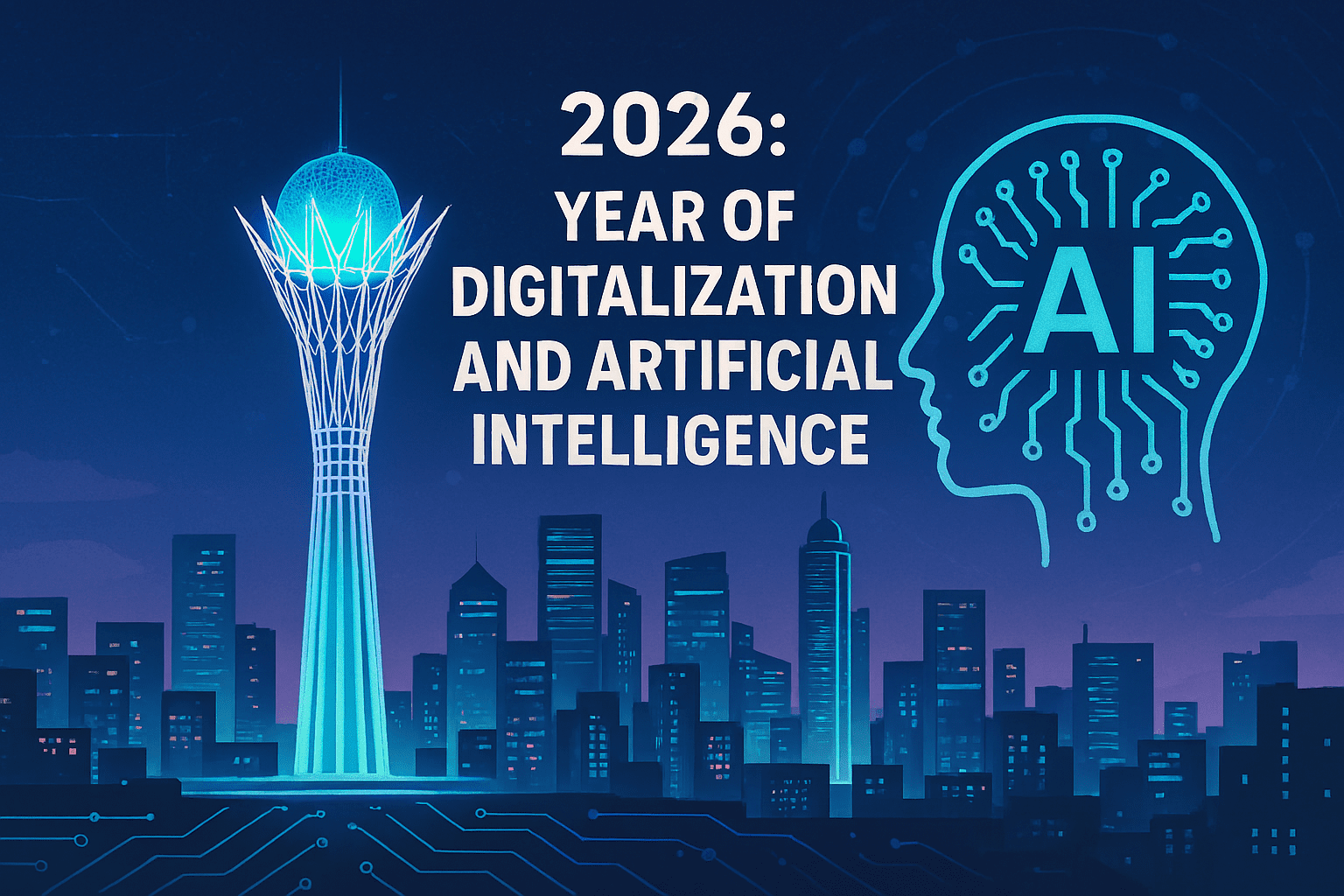
In January 2026, President of the Republic of Kazakhstan Kassym-Jomart Tokayev signed a decree declaring 2026 as the Year of Digitalization and Artificial Intelligence. This landmark initiative stands as one of the country’s top strategic priorities for the coming year, aiming to accelerate the integration of modern digital technologies and AI solutions across all sectors of society.
Key Goals of the Year of Digitalization and AI
The initiative sets out to drive systemic digital transformation in Kazakhstan’s economy, governance, social services, education, and business. Its core priorities include:
- Widespread adoption of AI in key economic sectors
- Expansion of digital infrastructure and accessibility of services for all citizens
- Ensuring high-speed internet access, even in remote rural areas
- Supporting innovative projects and tech startups
- Advancing education and workforce development in digital and AI technologies
Why This Initiative Matters
In his New Year address, President Tokayev emphasized that embracing cutting-edge technologies will strengthen the nation’s potential across all spheres of life and elevate Kazakhstan’s economy to a new level of global competitiveness. This move aligns with the country’s long-term strategy to transition toward a future-driven economy, where digitalization and AI are essential growth engines.
What’s Already Underway in 2026
- Development and rollout of AI implementation programs in government, business, healthcare, and education
- Accelerated digital transformation across regions: Deputy Prime Minister and Minister of Artificial Intelligence and Digital Development, Zhaslan Madiyev, visited the Karaganda region to discuss local digitalization plans
- Continued expansion of high-speed internet: By the end of 2025, over 2,600 rural communities had been connected, with plans to add another 1,900 in 2026
- The Ministry of Artificial Intelligence and Digital Development is prioritizing the launch of digital literacy and professional training programs for both the public and civil servants
Education and Talent Development
One of the core pillars of this initiative is preparing the next generation of tech professionals. Educational programs in AI and digital technologies are already being introduced in schools and universities. Plans are also underway to establish specialized AI centers and potentially even a dedicated AI university — laying the groundwork for future technological breakthroughs.
Opportunities for Business and Society
The Year of Digitalization and Artificial Intelligence is more than a national agenda — it’s a powerful signal to the market that innovation is becoming a cornerstone of development. AI opens up new opportunities for businesses of all sizes, from optimizing operations to launching entirely new tech-based products and services.
Key areas of impact include:
- Automation of public services
- Development of smart cities
- Healthcare digitalization
- Intelligent education platforms
- Support for startup ecosystems and the broader IT industry
Conclusion
Declaring 2026 the Year of Digitalization and Artificial Intelligence is not merely a symbolic gesture — it is a strategic roadmap shaping Kazakhstan’s future. This initiative paves the way for innovation, investment, talent development, and a higher quality of life for citizens, while also strengthening the country’s position on the global tech stage.